I have a running list—a Google Doc that has become my digital equivalent of a "Wall of Shame." It is titled: “AI Said This Confidently.” It is filled with screenshots of top-tier LLMs asserting absolute falsehoods with the unwavering confidence of a Fortune 500 CEO during a crisis.
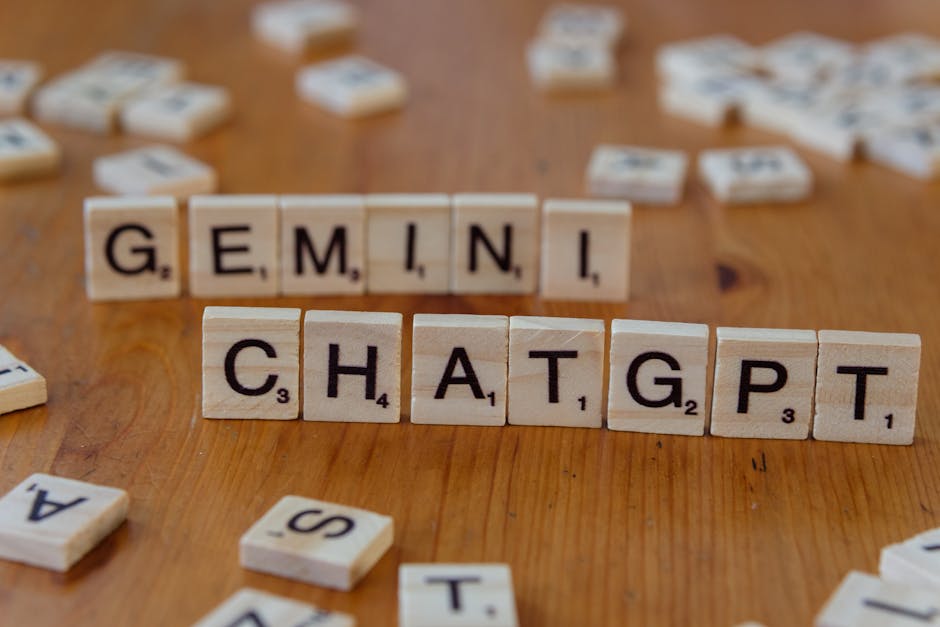
Every time I see a vendor claim their model is the "best" or "unbeatable," I ask the same question: What would change your mind? If you can’t answer that, you aren’t selling a tool; you’re selling a belief system.
For the past decade, I’ve been shipping SaaS products, from analytics platforms to devtools. If I’ve learned anything, it’s that relying on a single source of truth—whether it’s a database query or an LLM—is a recipe for single-point failure. The industry is currently obsessed with the pursuit of the "Omni-Model." But what if the future isn't a bigger model, but a smarter orchestration of mid-tier models? This is the core of stacked intelligence: the belief that an ensemble beats a single model every single time.
The Fallacy of the "God Model"
We are currently trapped in a benchmark-gaming loop. Companies release a new version, tune it for the top 5% of reasoning benchmarks, and claim total dominance. But when you move these models out of the lab and into the real world—the messy, ambiguous, context-heavy world of B2B work—their "brittleness" shows. A top-tier model suffers from what I call "confident hallucination syndrome." Because it is optimized for high-probability tokens, it often doubles down on its errors rather than admitting uncertainty.
The "ensemble beats single model" argument isn't about raw parameter counts. It’s about decision hygiene. When you use one model, you are stuck with its specific bias, its specific training cut-off, and its specific blind spots. When you use an ensemble of mid-tier models, you create a system of checks and balances.
The "Mid-Tier" Advantage
There is a massive misconception that mid-tier models Click here for more info are "worse." In reality, they are often more efficient and—crucially—less "homogenized." A model like Grok or specific instances accessible via Perplexity-style research workflows provide different architectural "perspectives." By stacking them, you aren't just getting more processing power; you are getting a committee.
How Orchestration Changes the Workflow
If you aren't using a tool that forces its models to disagree, you are wasting your time. I will not trust a tool until it shows me how it handles disagreement. If an AI gives me an answer without showing its work—or worse, without showing the conflicts in its logic—it’s just a fancy autocomplete.
To move beyond simple chat, we have to look at how we structure intelligence. At Suprmind, we’ve been testing the shift between two distinct modes of thinking: Sequential Mode and Super Mind Mode.
1. Sequential Mode: The Deductive Chain
Sequential mode is your standard reasoning chain. It’s effective for linear tasks: "Draft a memo, then summarize it, then format it into HTML." It’s helpful, but it’s fragile. If the first step in the sequence is slightly off, the entire output is corrupted. It lacks a feedback loop.
2. Super Mind Mode: The Parallel Synthesis Engine
This is where the magic happens. In Super Mind mode, we trigger parallel processes across an ensemble of mid-tier models. They look at the same data, but they arrive at their conclusions via different architectural pathways. Then, the Synthesis Engine takes these outputs, identifies the points of contention, and—this is the critical part—asks the models to resolve their differences.
Disagreement is a feature, not a bug. When two mid-tier models produce conflicting data points, the system flags a "discrepancy event." This forces the user (or a lead model) to resolve the ambiguity. It prevents the system from defaulting to the most "likely" sounding lie.
Comparison: Single Model vs. Orchestrated Ensemble
To understand why stacked intelligence is the future, look at how the decision-making process breaks down in a real-world enterprise environment.
Feature Single "God" Model Orchestrated Ensemble Bias Handling Locked into the model's training bias. Diverse architectures cross-verify. Error Correction Doubles down on hallucinations. Disagreement forces reconciliation. Transparency Black box ("trust me"). Audit trail of conflicting logic. Efficiency Costly per query; high latency. Optimized mid-tier models are faster.Shared Context: The Glue That Holds It Together
The greatest weakness of ensemble systems has always been context loss. If you split tasks up, you risk the "broken telephone" effect. A successful implementation of stacked intelligence requires a persistent, shared context layer.
Whether you are using a workspace like Suprmind or integrating disparate API calls, the context—the original requirements, the brand voice, the source documents—must be immutable and shared across all parallel instances. When the synthesis engine evaluates the outputs, it must map them back to that shared context. This is how you avoid the "buzzword buffet" that so many generic AI tools serve up today.
The Verdict: Why You Should Pivot
Stop asking, "Which model is the best?" That’s the wrong question for a professional. The real question is, "How does this system minimize my risk of a bad decision?"
An ensemble of mid-tier models, orchestrated through a synthesis engine that prioritizes disagreement and reconciliation, is infinitely more reliable than a single, expensive, black-box model. It provides an audit trail. It provides variance. It provides the only thing that actually matters in B2B SaaS: predictable, verifiable outcomes.
If you're tired of hype-driven AI and want to see how this works in practice, I encourage you to take it for a spin. We offer a 14-day free trial, no credit card required. I want you to try to break it. I want you to find the edge cases where the models disagree and see how the synthesis engine manages that friction. If it doesn't challenge your assumptions, I’ve failed my job.
The era of trusting the "God Model" is ending. The era of stacked intelligence is just beginning. Stop picking a favorite model and start picking a better system.
